Holiday Gift Guide - Any Recommendations?

Do you know of any businesses or products that should be featured in Higher’s annual holiday gift guide? We have a great list started for this year’s guide, but it can always be better!

Stay tuned for our annual holiday gift guide blog post. We’ll put all of your recommendations into one post to make your holiday shopping as easy as possible.

Please submit your recommendations by commenting below or by contacting us.

Welcome Nicole Redford, Program Manager for Higher

Today is Nicole’s first day! Nicole Redford joins us from Raleigh, North Carolina. Nicole has spent the last few years with USCRI as the Employment Coordinator overseeing six staff working in four programs: Matching Grant, Refugee Assistance Program, Targeted Assistance Grant, and the Cuban Haitian programs. She started the agency’s first job upgrade program securing grants and private donations. She has also worked with refugees across the spectrum of service areas as the Youth Coordinator for the International Rescue Committee in NYC, and as the Program Manager for Art for Refugees in Transition (A.R.T.) for three years. Nicole has a Master’s in Global Affairs from NYU where she focused on Human Rights.

Please join us in welcoming Nicole!

December 15, 2016 - Higher WIOA Collaboration Webinar

Collaborating with Mainstream Workforce Development and Taking Advantage of WIOA-funded Training Opportunities

Thursday, December 15, 2016

2:00 – 3:30pm EST

Higher has made a concerted effort over the past couple years to educate our network about the Workforce Innovation and Opportunities Act (WIOA) and the ways in which collaborating with the mainstream workforce development system can increase training and career opportunities for refugees. When it comes to helping refugees transition from survival jobs to fulfilling career pathways with better wages, the mainstream system has a lot to offer.

The webinar will offer both government and refugee agency perspective on current opportunities and strategies for collaboration between refugee employment programs and mainstream funding. Featured guest speakers include representatives of the U.S. of Department of Labor, the U.S. Department of Education, and the International Institute of Saint Louis, a refugee agency that has a long history of successful mainstream partnership.

We hope you will join us!

Register here

December 7, 2016 - Higher Financial Literacy Webinar

Financial Literacy: How to Teach the Basicsmoney background

Wednesday, December 7, 2016

2:00 - 3:15pm EST

This webinar will explore basic financial literacy topics to cover with clients to build a strong foundation for economic self-sufficiency. Presenters
will highlight a variety of free financial literacy resources and will provide examples of community partnerships that can be replicated. Financial literacy curricula, job readiness activities and training tips will be shared throughout the training.

Register here

Job Readiness Activities for Adult Learners

Last week in Denver, attendees in the job readiness session participated in an activity to list the tools, resources and activities they currently use with clients. Here’s the combined list. If possible, a link to a version of the activity is included. If you have a different version of any activity, or you have any resources to add, please contact us so we can update the list!

Interview Practice

Mock Interviews

Record Clients & Play Back for Client

Practice Interview Questions

Interactive Activities

Job Readiness Bingo

Body Language Activities

Flash Card Bowling

Welcome Circle: Begin Class by Asking Everyone Name, Origin, Languages and their First Job

First Day: Classroom Expectations – Importance of Classroom Success

Incorporating Certificates after Job Day Trainings

Resume Jeopardy

Skills

Identifying Skills that Refugees Have – Physical vs. Personal Skills

Explain How to Transfer Skills

Look at Job Listing Examples and ask, “Do you have the skills?”

Presentations

Picture Heavy PowerPoint

Visual Resources

Pictures

Describe Career Dreams Using Pictures

Videos

Videos to show the Work Done at Different Jobs

Quality Control Video – Quality, Quantity

Cards

Realia – Safety Gear

Higher Resources

Higher Advantage Modules

U.S. Job Cycle Visual (page 2)

Guided Practice

Mock Hotel Environment – Practice

Dishwasher Training at Location

Time Clock Practice

Time Clock for Attendance

Production Line Simulation

6-Day Training Spurts (short-term)

Applications & Resumes

Resume Preparation

Filling out Applications

Applications Planted at Businesses

In Class Resume Building (Skeleton Version)

Practice Application

Job Search

How to Find Jobs

Digital Literacy

Computer Lab

Mobile Computer Labs

Group Discussions

Small Group Discussion about Hygiene & Dress

Small Groups – Have clients create their own business & say what skills are needed for job

Specific Training Topics

Safety Classes: Use signs with Pictures, explain what signs mean. Explain the importance of reporting issues

Lessons on Trauma and the Impact of Trauma

Workplace Culture (i.e. handshakes & other non-verbal communication)

Job Security/Responsibility to Communicate with Supervisors (2 weeks notice)

Coworker relationships, manners, mannerisms

Hygiene, Grooming

Transportation – Teaching bus lines

English Instruction

Translated Materials

Mandatory ESL

Teach Job-Appropriate Vocabulary

Community Partnerships

Clothing Donations as Incentives

Local Library Partnerships

Adding Social Enterprises into your Curriculum

Financial Literacy

I-9 & W-2 (Tax & Pay)

Explain Payroll, Direct Deposit and Tax Forms

Assist with Opening Bank Account

Translators/Interpreters

Record Videos of Interpreters

Assessments

Go Over Pre-Employment Assessment (Reading Comprehension)

Mock Interview/Application Process as Assessment

Other

Self-Reflection

Tour at Companies

CORE

Childcare (Paid Employees)

One-on-One Pre-Employment Counseling

Wish List

More Tactile Activities

Child Care Resources – Toys for Kids

Notes

Factoring in Trauma when making Job Placements

Meat Packing isn’t good for People with Trauma

Higher’s December Webinars

Financial Literacy: How to Teach the Basics

Wednesday, December 7, 2016

2:00 - 3:15pm EST

Financial literacy is an essential component of economic self sufficiency. This webinar will explore what topics are most important and will feature resources designed to be used as job readiness activities. Panelists will share financial literacy initiatives and examples of community partnerships that can be replicated. Financial literacy curriculums will be highlighted throughout the training.

Register here


Collaborating with Mainstream Workforce Development and Taking Advantage of WIOA-funded Training Opportunities

Thursday, December 15, 2016

2:00 – 3:30pm EST

Higher has made a concerted effort over the past couple years to educate our network about the Workforce Innovation and Opportunities Act (WIOA) and has highlighted mainstream workforce development resources and collaboration case studies on our blog. In this webinar, Higher will continue building our network’s awareness of WIOA-related opportunities by highlighting specific career pathways opportunities within the mainstream workforce system that have potential to help refugees move beyond “survival jobs.” Speakers are still being confirmed, but Higher is hoping that this webinar will feature both government WIOA experts, as well as refugee field staff that have successfully collaborated with the mainstream system.

Register here

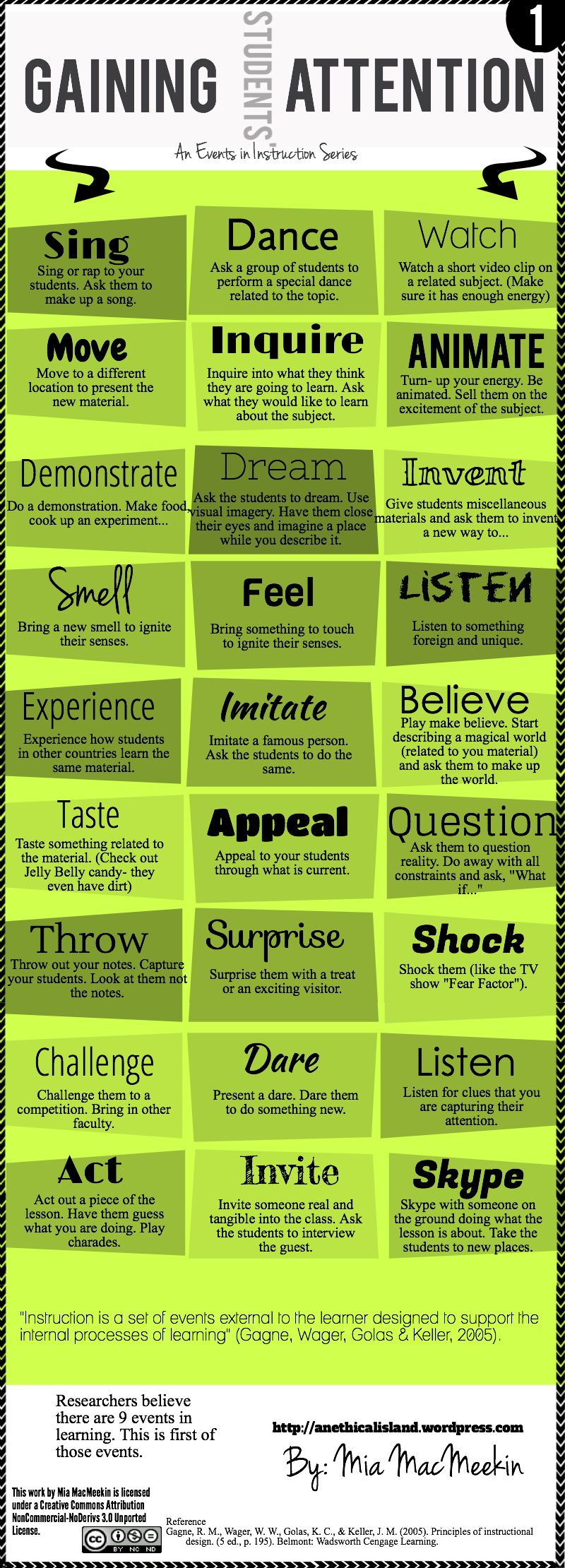
How to Gain the Attention of Learners - Video & Infographic

One of today’s sessions in Denver is titled “Job Readiness Activities for Adult Learners“. The session is designed around the LIRS eLearning module, Adult Learning Principles, and focuses on seven steps to ensure learning, beginning with gaining the attention of learners.

The session will begin with “The Balloon Game”, a fun activity that is easy to connect to the competitive nature of the U.S. job market. The short video below (an excerpt from Adult Learning Principles) explains how to conduct the activity.

Next week, we’ll share a list of tools, activities and resources that are effective in job readiness classrooms across the country. In the meantime, the below infographic has tips for gaining the attention of your audience so they are motivated and ready to learn, whatever comes next.

Please contact us for access to Adult Learning Principles in Higher’s Online Learning Institute.

gagne1

How to Get Refugees to Living-Wage Work

Guest post from Alicia Wrenn, Assistant Director for Integration at LIRS

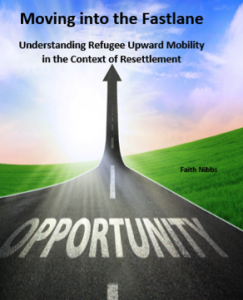
I had the opportunity to attend a Forced Migration Upward Mobility Project (FMUMP) workshop on October 16th in New York City where Dr. Faith Nibbs presented her report Moving into the Fastlane: Understanding Refugee Mobility in the Context of Resettlement. It is great reading and gives us much to think about to improve employment outcomes for clients. One of the main goals of FMUMP is to assist refugees (and employment practitioners), to find jobs that pay a living-wage as defined generally as $5 over the minimum, but it will vary based on the market.

Her team did research in the Dallas and Ft. Worth communities over a period of 2.5 years. They interviewed refugees, employment staff, and scholars – 350 in total. And they observed 300 hours of service provision and reviewed all available data and literature on the topic.

moving-into-the-fastlane With targeted skills training it took just over one year to break the living wage threshold. The study found this to be the single greatest impact on wages. This was true for all the sub-populations – including highly skilled, low skilled, for men, and for women. Dr Nibbs went through a Return on Investment calculation that showed the net effect when making these wage gains - the savings on government assistance (Food Stamps etc.), plus the increased taxes paid by the refugee at the new wage, and that weighed against the cost of job skills training of approximately $3,000 per person. The ROI to the government is about 600%. So the investment by the government in skills training makes good sense.

This teaches us a couple of things. Employment teams should be looking for job skills training for clients from all possible sources - government, community college, and company-led - now knowing this is the single biggest influencer. The study found it to be more important than the general English language training that is available. They discovered that the typical ESL that occurs for a few hours per week and teaches general conversation has less of an impact. See the report for interesting ways to improve this instruction such as an on-line platform for more cumulative hours, and the very positive effect of tailoring the vocabulary instruction to the work place.

Dr. Nibbs had thoughts about other issues undermining living wage attainment. It was discovered that refugee clients are not given an understanding that while yes they need to take the first job, there are certain industries that are much more financially rewarding and will pay a living wage. This research has shown that clients by and large had no idea that they would never make ends meet nor advance up the pay scale in certain sectors. It was thought that Case Managers themselves might not be aware of this hierarchy of earning potential by industry sector.

There are a few interesting pilots occurring to address these gaps. The Office of Refugee Resettlement has funded a Career Navigator position in the State of Washington to determine if this can create a bridge for better placements and better information conveyed to refugees. IRC has five Career Development sites that provide to refugees targeted career training one year after arrival for those unemployed. There should be some interesting learnings down the road.

The report is here - http://www.fmump.org/ - on the home page there is an option to download.

You may also be interested in checking out Dr. Nibbs’ presentation at Higher’s Second Annual Refugee Employment Conference, which took place in Omaha, NE in November, 2015: http://www.higheradvantage.org/second-annual-refugee-employment-workshop-resources/ .

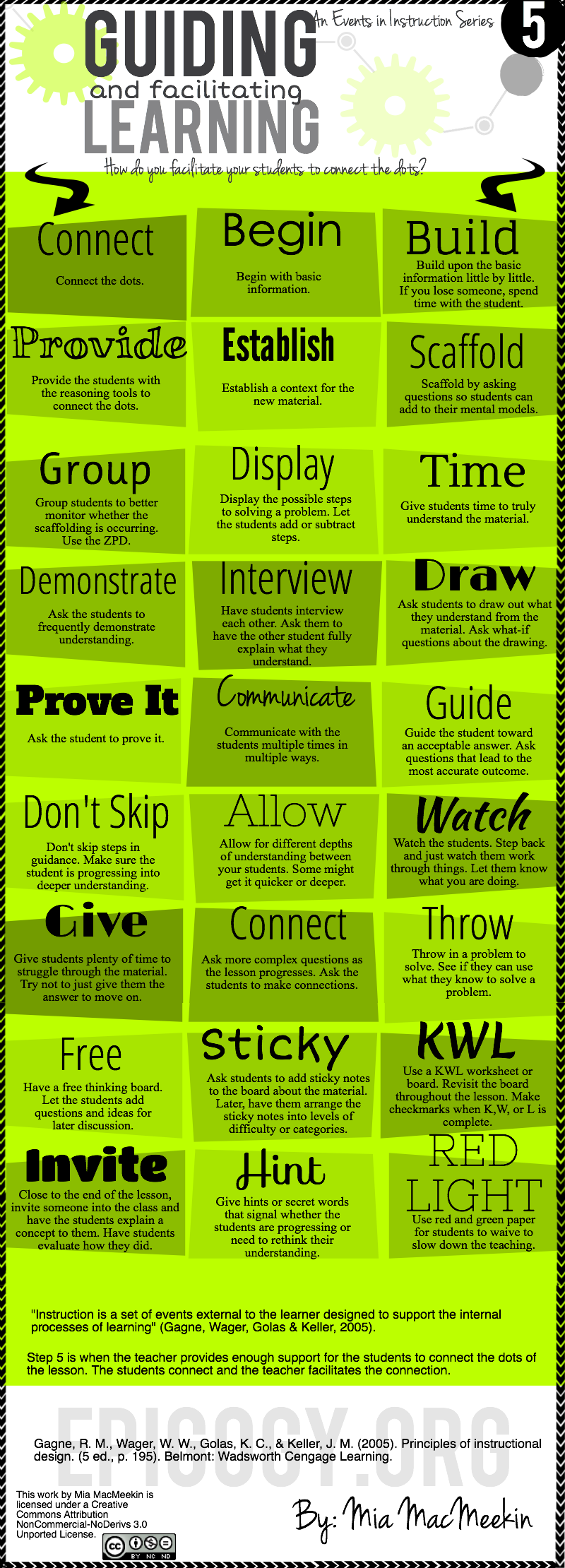
Guiding and Facilitating Learning - Infographic

All of us are responsible for guiding and facilitating learning in some way. You might be teaching soft skills to clients in the job readiness classroom or showing the new intern how to book a conference room. Although this infographic contains tips and suggestions for use in the classroom setting, the first few lines can apply to the informal learning that happens between coworkers every day.

event5

Source: https://anethicalisland.wordpress.com/2013/05/11/events-in-instruction-event-5/

Last Chance to Register for Higher’s Third Annual Refugee Employment Workshop

Blucifer will greet you at the airport.

Today is the last day to register for the Third Annual Refugee Employment Workshop, November 2 - 4 in Denver. We’re almost sold out, so be sure to register today!

We have a great agenda planned for these few days. There are too many exciting presenters, panels and topics to list. If you’re curious, check out the draft agenda here.

Besides the amazing content, the agenda is full of peer networking opportunities, as well as a few surprises that you’re going to love.

Feel free to contact us with any questions.

See you in Denver!